
From Radium to Super-LumiNova: A Brief History of Lume
An easy introduction to watch lume, how it works, and why it matters.
If you have ever checked your watch in the dark and could still read the time, you already know what lume is.
Lume is a luminous material applied to the hands and indices of a watch so it stays readable in low light or complete darkness. Its role is simple. Let you tell the time when light is gone.
That is it.
But despite how small it looks, lume has one of the more fascinating and slightly unsettling histories in watchmaking.
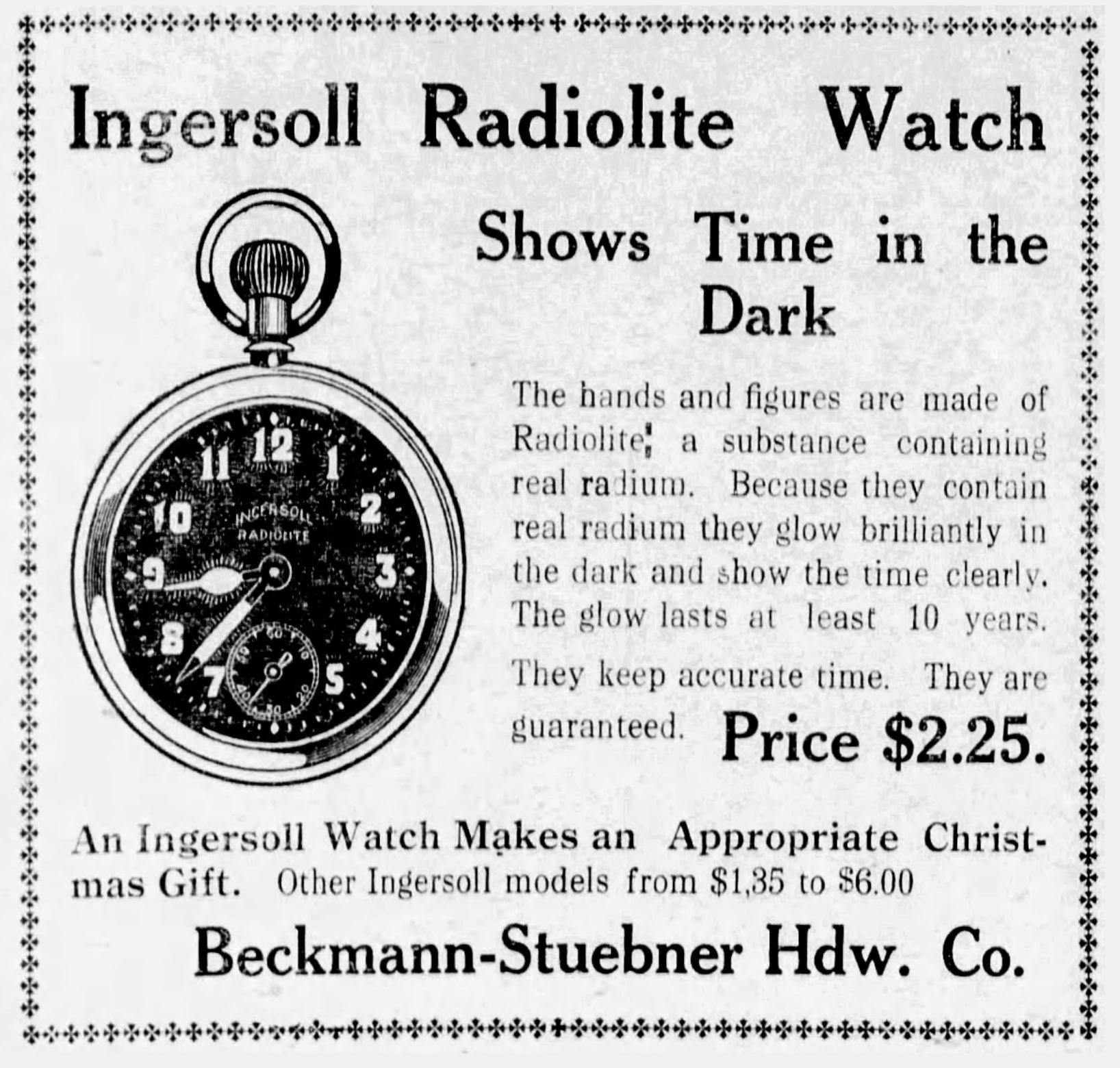
November 1917 ad for an Ingersoll "Radiolite" watch, one of the first watches mass marketed in the USA featuring a radium-illuminated dial.
A brief and slightly wild history of lume
The first luminous watches appeared in the early 1900s, at a time when night visibility was becoming important for soldiers, pilots, and railway workers. Back then, glow-in-the-dark meant one thing: radium.
Radium-based paint glowed constantly without needing to be charged by light. It sounded perfect. The problem was that radium is highly radioactive. At the time, the danger was not fully understood, and it was used generously, even casually. Watch dials, hands, instruments, everything that needed to glow got a coat of it.
The consequences were serious. Factory workers who applied radium paint suffered severe health issues, and the material itself was dangerous to handle and wear long-term. By the mid-20th century, it became clear that this was not something the industry could continue using.
Radium was eventually replaced by tritium, which was less radioactive but still not harmless. Tritium-based lume was common from the 1960s through the 1990s and can still be found on vintage watches today, usually marked with a small “T” on the dial.
The real turning point came when the industry moved to non-radioactive, photoluminescent materials. This is where modern lume begins.

Three radium dials and a radon detector are placed in a sealed plastic container. After 6 hours, the radon level was 446 pCi/L.
Zorya's Leshak work
Modern lume and why Super-LumiNova dominates
Today, most watches use photoluminescent pigments that charge under light and glow in the dark without any radioactivity, making modern watch lume both safe and highly reliable for everyday use.
The name you hear most often is Super-LumiNova, produced by the Swiss company RC Tritec.
Super-LumiNova does not glow forever, but when properly applied, it charges quickly and releases light gradually over hours. It is safe, stable, and extremely versatile, which is why it is used across the industry.
Many large brands rely on it, sometimes under their own names. Rolex uses Chromalight, known for its blue glow. Omega uses Super-LumiNova in several formulations. On the Japanese side, Seiko developed its own compound called LumiBrite, famous for its brightness and longevity.
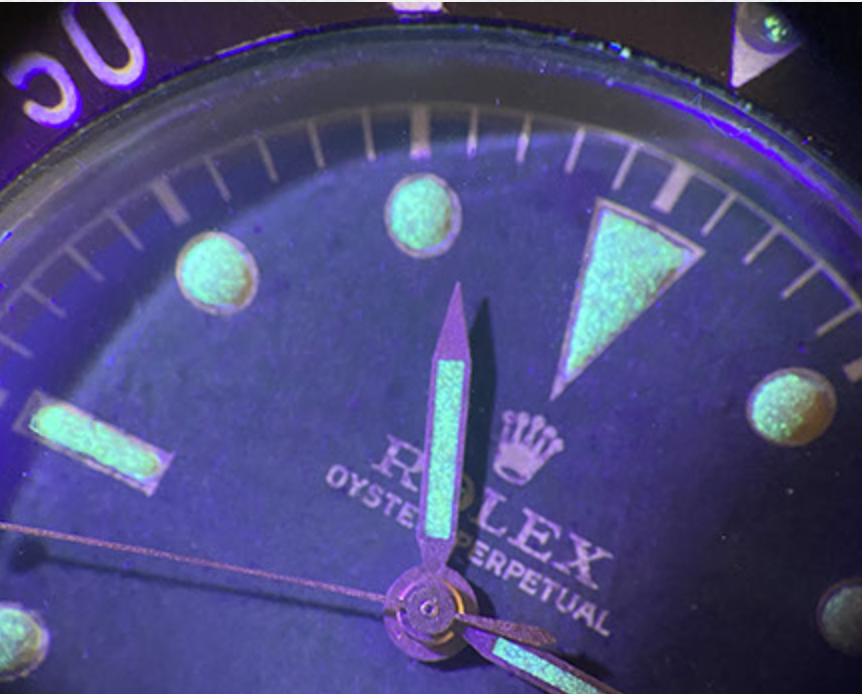
Reference 6205 Radium Lume under UV light from 1954
courtesy of https://rolexhaven.com/
Super-LumiNova is not just one thing
Lume is often treated as either good or bad, but in reality there are many Super-LumiNova grades, each with its own personality. C3 is among the brightest and glows green, though it can appear slightly creamy or yellowish in daylight. C1 looks very clean and white during the day but has a softer glow at night. Blue-glowing options like BGW9 offer a different balance between brightness, longevity, and daytime appearance. Beyond the compound itself, application plays an important role too. Thickness and consistency directly affect how long and how strongly the lume performs.
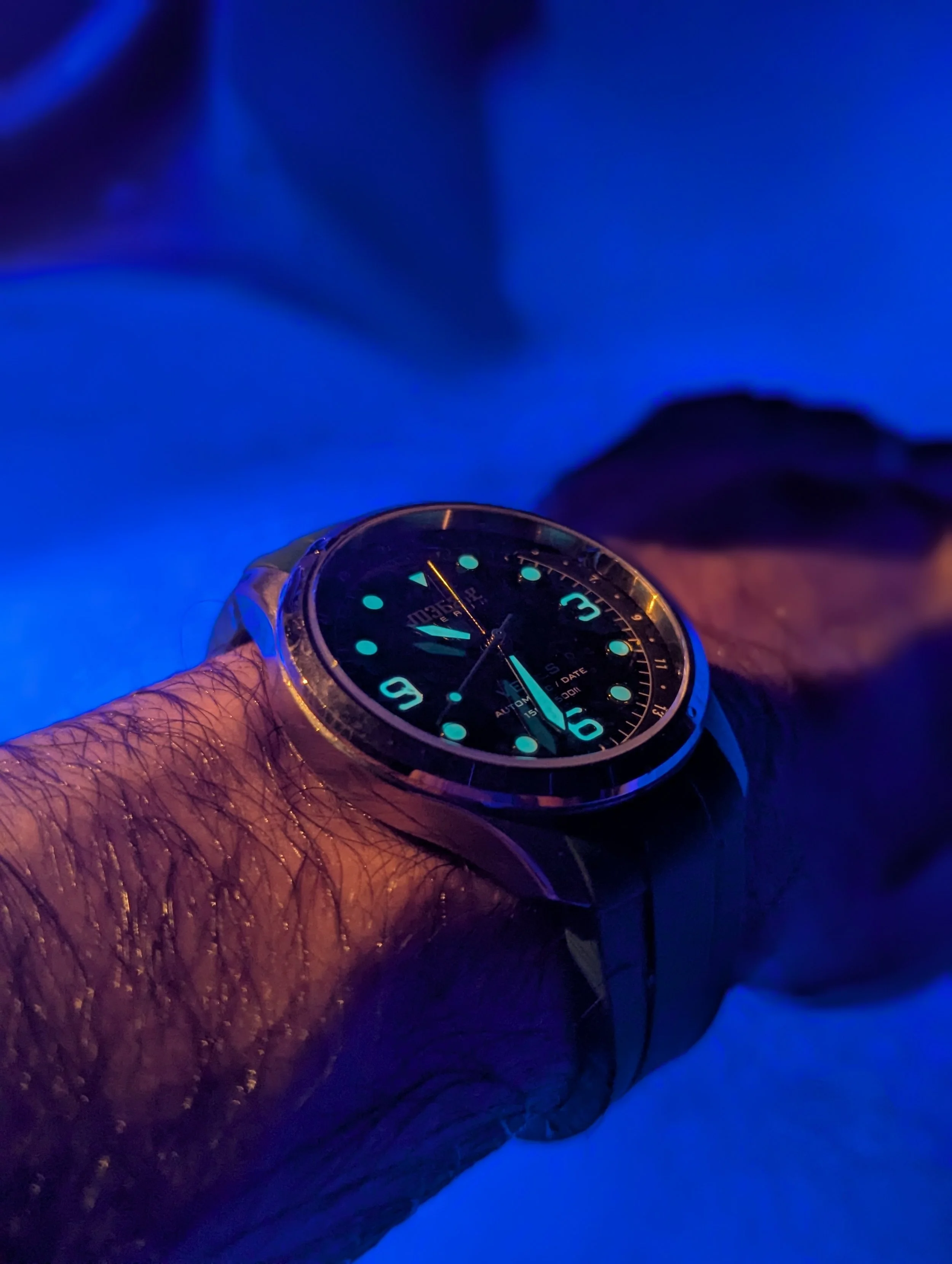
Perun - Veles in Midnight Black, SuperLumi-Nova in BGW9
How we approached lume on Veles
For Veles, the goal was balance. We compared different options in daylight and darkness, focusing on how the indices and hands look when the lume is not glowing. We wanted them to stay clean white, without green or yellow undertones, which led us to Super-LumiNova BGW9. It glows blue at night and remains visually neutral during the day, with enough depth applied to ensure solid visibility without changing the watch’s daytime character.
Lume is one of those details that feels insignificant until you rely on it. Then it becomes essential. It is also one of the clearest examples of how function, aesthetics, and personal preference meet in watchmaking. There is no universal winner, only choices that align with the character of a watch.
